Featured Content
5 Tips to Help Your Child at the Doctor
Explore tips on going to doctor’s appointments, making it a stress-free experience for both you and your child.


Printables

Color-by-Letter: Dr. Patches and Nurse Scrubs Take a Selfie
Your child can color in a fun selfie moment with Dr. Patches and Nurse Scrubs! This color-by-letter page shows our favorite TinyDocs duo smiling big, with letters guiding the way to each color. It is a playful twist on color-by-number, perfect for kids who are starting to recognize letters. Color-by-letter activities help kids practice letter recognition and color matching while they create something fun. They also give little hands a calm, screen-free way to unwind after a busy day. With nine colors to find and use, this page is great for kids who love a cheerful challenge. What's inside: A printable PDF with the full coloring scene A simple color key with 9 lettered shades Great for ages 5 and up Print it out, grab some crayons or markers, and let your child color in this happy selfie moment.
Disco Dance Party with Nurse Scrubs
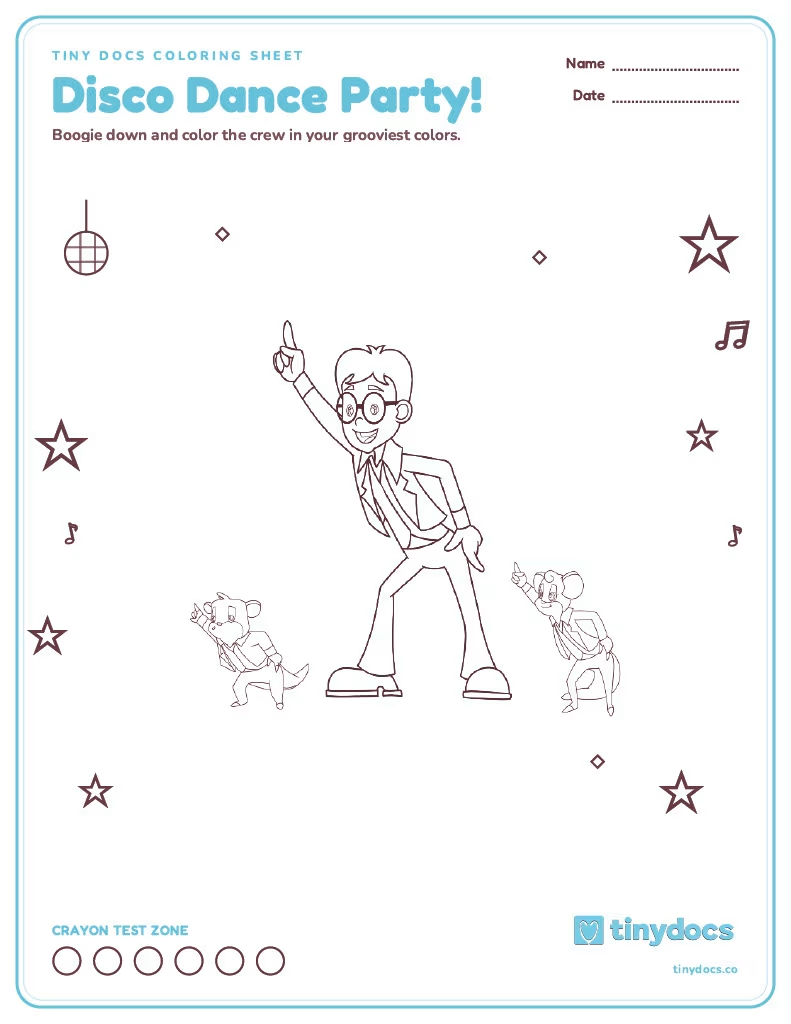
Get ready to boogie! Your child can color in Nurse Scrubs and the meerkat crew busting a move under a disco ball, surrounded by stars and music notes. This free color page lets kids choose their own grooviest color combos, with no number or letter key to follow. Free coloring pages give kids a chance to make creative choices and build confidence with color. They also offer a calm, screen-free way to unwind after a busy day. A crayon test zone at the bottom lets your child try out colors before diving into the scene. What's inside: A printable PDF with the full dance party scene A crayon test zone to sample colors first Name and date fields, perfect for keepsakes or classroom use Great for ages 5 and up Print it out, grab your favorite crayons or markers, and let the dance party begin.
Color-by-Number: Meet Dr. Patches at Her Desk
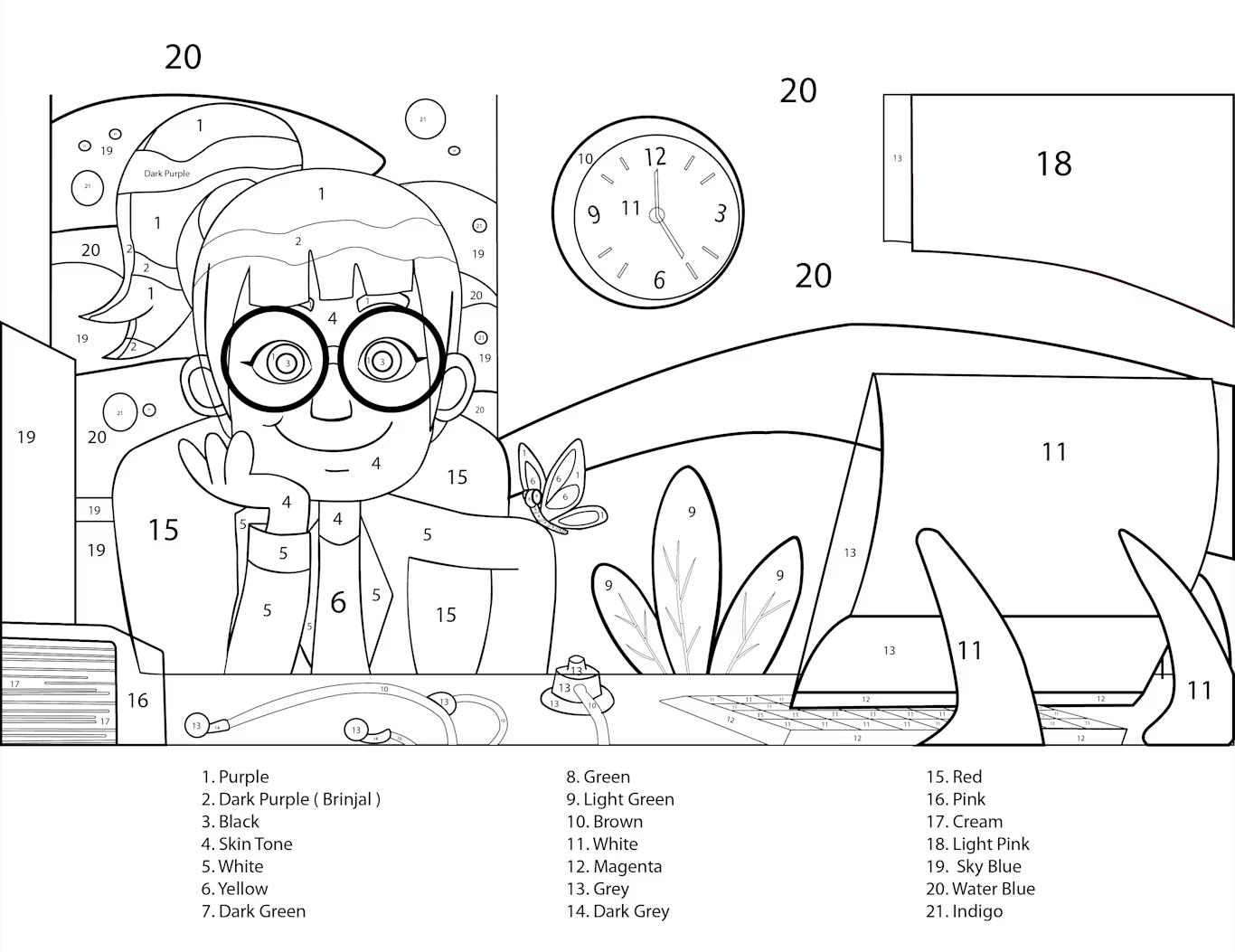
Your child can bring Dr. Patches to life, one number at a time! This color-by-number page features our favorite TinyDocs doctor hard at work at her desk, with a butterfly stopping by to say hello. Each number matches a color, so your child builds focus and confidence while creating something beautiful. Color-by-number activities help kids practice number recognition, color matching, and following directions. They also give little hands a calm, screen-free way to unwind after a busy day. This page is perfect for kids who love details, since there are 21 colors to find and use. What's inside: A printable PDF with the full coloring scene A simple color key with 21 numbered shades Great for ages 5 and up Print it out, grab some crayons or markers, and let Dr. Patches come to life in your child's favorite colors.
What's New
 blog
blogTonsillectomy for Kids: A Pediatrician’s Guide for Parents
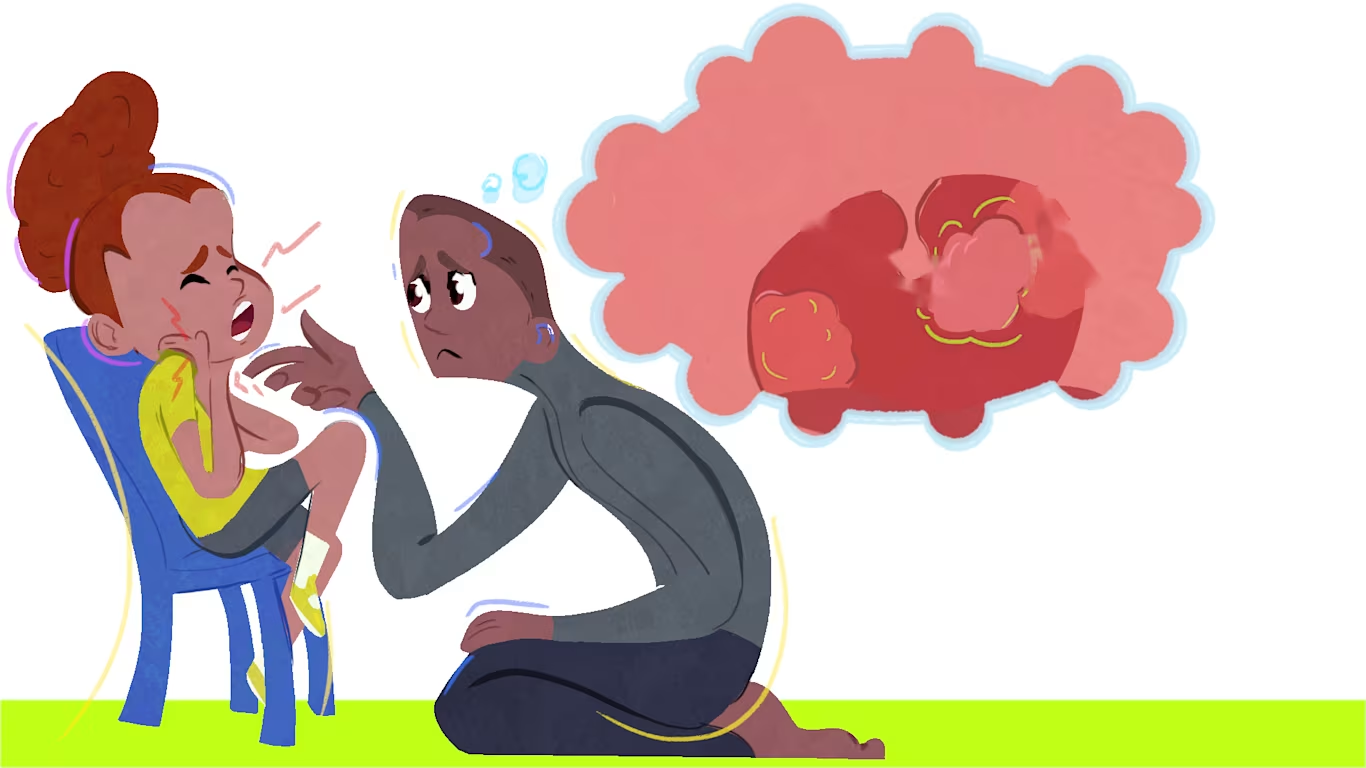
A child needing surgery can be an unsettling thought for a parent. A tonsillectomy for kids is one of the most common surgeries children have and most kids recover at home in 1 to 2 weeks. Before you agree to surgery, you should understand why it is the best choice for your child, how it is done, how to care for your child afterward, and what problems to watch for. ## What is a tonsillectomy? A tonsillectomy is surgery to remove the tonsils. The tonsils are soft tissues in the back of the throat. Normally, they help fight throat infections. Children can stay healthy without them, because the body has many other ways to fight germs. Sometimes the surgeon removes the adenoids at the same time. The adenoids are similar tissue that sits higher up, behind the nose. Removing both is called a tonsillectomy and adenoidectomy, or “T&A” for short. ## Why do kids need their tonsils out? There are two main reasons. The first is infection. Some children get throat infections (like strep throat) over and over. Doctors often consider surgery when a child has had 7 or more infections in 1 year, 5 or more a year for 2 years, or 3 or more a year for 3 years. The second reason is breathing. Sometimes the tonsils grow so big that they make it hard to breathe, especially during sleep. This is called obstructive sleep apnea. Parents may notice: - loud snoring most nights - pauses in breathing or gasping during sleep - restless sleep - a child who is tired, cranky, or has trouble focusing during the day - bedwetting that starts again after a child was dry If left untreated, repeated strep throat and sleep apnea can affect a child’s sleep, behavior, schoolwork, and growth. They can also lead to other serious problems. ## What age can a child have a tonsillectomy? There is no single right age. Your child’s surgeon will decide based on their health and symptoms. Children under 3 and children with severe sleep apnea may stay in the hospital overnight so the care team can watch their breathing. ## How to prepare your child for tonsil surgery Your child’s surgeon will give you instructions on when your child should stop eating and drinking. Please follow them closely. Your child will get anesthesia (sleep medicine) during surgery. Anesthesia relaxes the body, which makes it easier for food or drink in the stomach to come back up and get into the airway. An empty stomach keeps your child safe. If the instructions are not followed, the surgery may have to be moved. It also helps to talk with your child ahead of time. Kids cope better when they know what is coming. Use simple, honest words, such as: “The doctor is going to take out your tonsils so you can sleep better and get sick less.” Younger children may like hearing that tonsils are two little guards at the back of the throat that got too tired to do their job. When you talk about anesthesia, you might say, “You’ll get special sleep medicine, so you won’t feel anything. You’ll wake up when it’s done.” Try not to say “put to sleep,” since some children connect that phrase with pets. Be honest that their throat will hurt afterward and that it will get a little better each day. A favorite stuffed animal or blanket can come along to the hospital, too. Before surgery day, stock up on cold drinks, popsicles, and soft foods like applesauce, yogurt, pudding, and mashed potatoes. Ask your child’s doctor which pain medicine to have at home. ## What happens on surgery day? The surgery usually takes less than an hour, and your child will be fully asleep the whole time. If there are no complications, most children go home a few hours later. As the anesthesia wears off, your child may be sleepy, fussy, or a bit confused for a while. ## Tonsillectomy recovery at home Most children feel better in 7 to 10 days, though some need closer to 2 weeks. The sore throat often gets worse around days 3 to 5 before it starts to improve. Many kids also have ear pain, because the throat and ears share nerves. Other things that are normal during recovery: - bad breath, which can last up to 2 weeks - white or gray patches in the back of the throat (these are scabs, and they fall off on their own) - an upset stomach or some vomiting in the first day or two - a low fever in the first few days - snoring for a little while, until the swelling goes down To help your child heal, the most important thing is fluids. Cold drinks are soothing and help prevent dehydration. Start with soft, cool foods and add regular foods as your child feels ready. Keep your child away from sick people, and avoid sports and rough play for about 2 weeks. For throat pain, acetaminophen (Tylenol) and ibuprofen (Motrin) can help. Your child’s doctor will give you the correct dose and tell you how often to give it. Giving it on a schedule, rather than waiting for the pain to get bad, usually works best. Do not give children codeine or aspirin after this surgery. ## When to call the doctor after a tonsillectomy Bleeding can happen up to 2 weeks after surgery. It is most common around days 5 to 10, when the scabs come off. Go to the emergency room or call 911 right away if your child: has bright red blood coming from the mouth or nose, or vomits or spits up bright red blood has trouble breathing Call your child’s surgeon right away if your child cannot swallow liquids, cannot keep clear drinks down, or is peeing much less than usual. You should also call for a fever over 102°F or pain that medicine does not help. If your child still has a sore throat or ear pain after 2 weeks, contact their doctor. ## Tonsillectomy FAQs Is tonsil surgery painful for kids? Your child will not feel anything during surgery. Afterward, the throat will be sore for about 7 to 10 days. Pain medicine, cold drinks, and soft foods help. How long does tonsillectomy recovery take? Most kids recover in 7 to 10 days. Some take up to 2 weeks to feel fully back to normal. When can my child go back to school? Usually in 1 to 2 weeks, once they are eating and drinking well and no longer need regular pain medicine. Do tonsils grow back? Rarely. A small piece of tissue can grow back, but this is uncommon and usually does not cause problems. Will my child get sick less often? Children who had frequent strep throat usually have fewer throat infections after surgery. They will still catch colds. *This article is for general education and does not replace advice from your child’s doctor. Always follow the instructions from your child’s surgeon.*
printableDisco Dance Party with Nurse Scrubs
Get ready to boogie! Your child can color in Nurse Scrubs and the meerkat crew busting a move under a disco ball, surrounded by stars and music notes. This free color page lets kids choose their own grooviest color combos, with no number or letter key to follow. Free coloring pages give kids a chance to make creative choices and build confidence with color. They also offer a calm, screen-free way to unwind after a busy day. A crayon test zone at the bottom lets your child try out colors before diving into the scene. What's inside: A printable PDF with the full dance party scene A crayon test zone to sample colors first Name and date fields, perfect for keepsakes or classroom use Great for ages 5 and up Print it out, grab your favorite crayons or markers, and let the dance party begin.
printableColor-by-Letter: Dr. Patches and Nurse Scrubs Take a Selfie
Your child can color in a fun selfie moment with Dr. Patches and Nurse Scrubs! This color-by-letter page shows our favorite TinyDocs duo smiling big, with letters guiding the way to each color. It is a playful twist on color-by-number, perfect for kids who are starting to recognize letters. Color-by-letter activities help kids practice letter recognition and color matching while they create something fun. They also give little hands a calm, screen-free way to unwind after a busy day. With nine colors to find and use, this page is great for kids who love a cheerful challenge. What's inside: A printable PDF with the full coloring scene A simple color key with 9 lettered shades Great for ages 5 and up Print it out, grab some crayons or markers, and let your child color in this happy selfie moment.
printableColor-by-Number: Meet Dr. Patches at Her Desk
Your child can bring Dr. Patches to life, one number at a time! This color-by-number page features our favorite TinyDocs doctor hard at work at her desk, with a butterfly stopping by to say hello. Each number matches a color, so your child builds focus and confidence while creating something beautiful. Color-by-number activities help kids practice number recognition, color matching, and following directions. They also give little hands a calm, screen-free way to unwind after a busy day. This page is perfect for kids who love details, since there are 21 colors to find and use. What's inside: A printable PDF with the full coloring scene A simple color key with 21 numbered shades Great for ages 5 and up Print it out, grab some crayons or markers, and let Dr. Patches come to life in your child's favorite colors.

Featured Blog
Tonsillectomy for Kids: A Pediatrician’s Guide for Parents
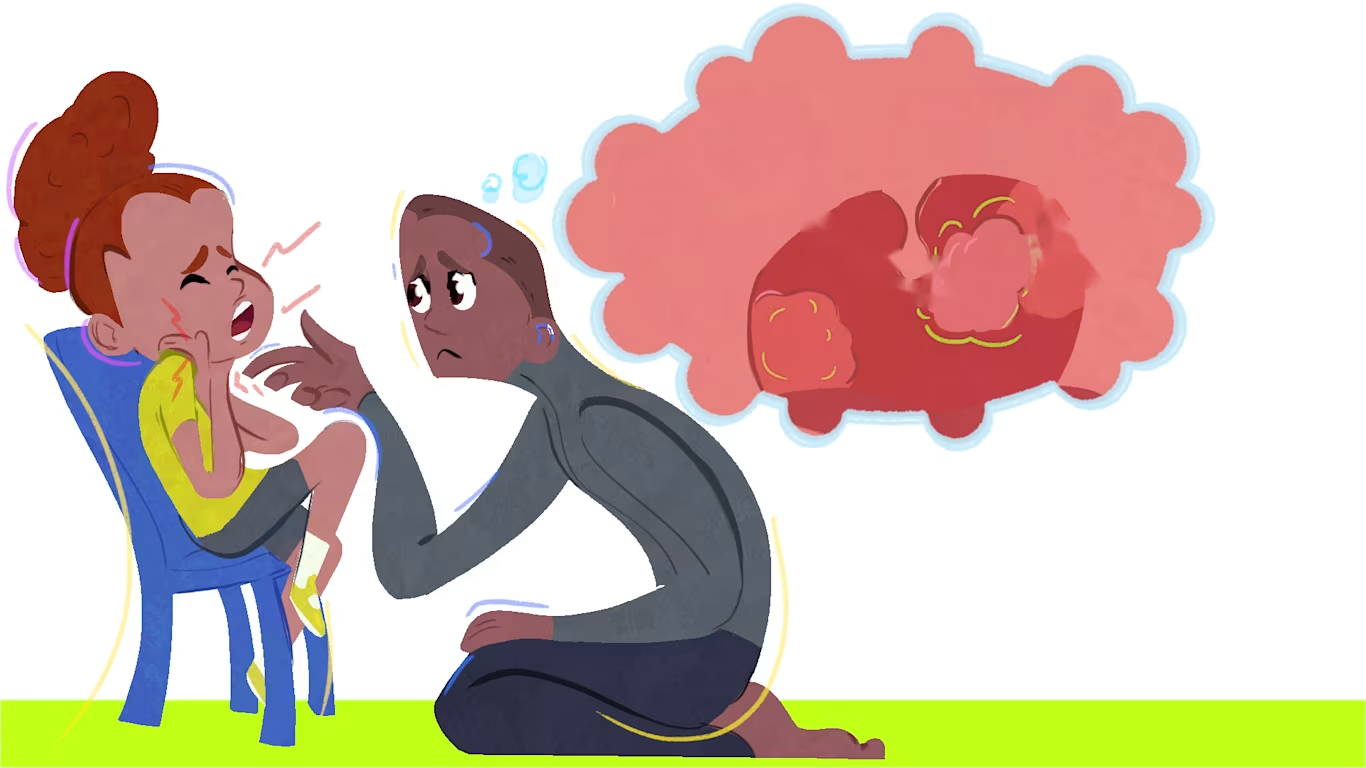
A child needing surgery can be an unsettling thought for a parent. A tonsillectomy for kids is one of the most common surgeries children have and most kids recover at home in 1 to 2 weeks. Before you agree to surgery, you should understand why it is the best choice for your child, how it is done, how to care for your child afterward, and what problems to watch for. ## What is a tonsillectomy? A tonsillectomy is surgery to remove the tonsils. The tonsils are soft tissues in the back of the throat. Normally, they help fight throat infections. Children can stay healthy without them, because the body has many other ways to fight germs. Sometimes the surgeon removes the adenoids at the same time. The adenoids are similar tissue that sits higher up, behind the nose. Removing both is called a tonsillectomy and adenoidectomy, or “T&A” for short. ## Why do kids need their tonsils out? There are two main reasons. The first is infection. Some children get throat infections (like strep throat) over and over. Doctors often consider surgery when a child has had 7 or more infections in 1 year, 5 or more a year for 2 years, or 3 or more a year for 3 years. The second reason is breathing. Sometimes the tonsils grow so big that they make it hard to breathe, especially during sleep. This is called obstructive sleep apnea. Parents may notice: - loud snoring most nights - pauses in breathing or gasping during sleep - restless sleep - a child who is tired, cranky, or has trouble focusing during the day - bedwetting that starts again after a child was dry If left untreated, repeated strep throat and sleep apnea can affect a child’s sleep, behavior, schoolwork, and growth. They can also lead to other serious problems. ## What age can a child have a tonsillectomy? There is no single right age. Your child’s surgeon will decide based on their health and symptoms. Children under 3 and children with severe sleep apnea may stay in the hospital overnight so the care team can watch their breathing. ## How to prepare your child for tonsil surgery Your child’s surgeon will give you instructions on when your child should stop eating and drinking. Please follow them closely. Your child will get anesthesia (sleep medicine) during surgery. Anesthesia relaxes the body, which makes it easier for food or drink in the stomach to come back up and get into the airway. An empty stomach keeps your child safe. If the instructions are not followed, the surgery may have to be moved. It also helps to talk with your child ahead of time. Kids cope better when they know what is coming. Use simple, honest words, such as: “The doctor is going to take out your tonsils so you can sleep better and get sick less.” Younger children may like hearing that tonsils are two little guards at the back of the throat that got too tired to do their job. When you talk about anesthesia, you might say, “You’ll get special sleep medicine, so you won’t feel anything. You’ll wake up when it’s done.” Try not to say “put to sleep,” since some children connect that phrase with pets. Be honest that their throat will hurt afterward and that it will get a little better each day. A favorite stuffed animal or blanket can come along to the hospital, too. Before surgery day, stock up on cold drinks, popsicles, and soft foods like applesauce, yogurt, pudding, and mashed potatoes. Ask your child’s doctor which pain medicine to have at home. ## What happens on surgery day? The surgery usually takes less than an hour, and your child will be fully asleep the whole time. If there are no complications, most children go home a few hours later. As the anesthesia wears off, your child may be sleepy, fussy, or a bit confused for a while. ## Tonsillectomy recovery at home Most children feel better in 7 to 10 days, though some need closer to 2 weeks. The sore throat often gets worse around days 3 to 5 before it starts to improve. Many kids also have ear pain, because the throat and ears share nerves. Other things that are normal during recovery: - bad breath, which can last up to 2 weeks - white or gray patches in the back of the throat (these are scabs, and they fall off on their own) - an upset stomach or some vomiting in the first day or two - a low fever in the first few days - snoring for a little while, until the swelling goes down To help your child heal, the most important thing is fluids. Cold drinks are soothing and help prevent dehydration. Start with soft, cool foods and add regular foods as your child feels ready. Keep your child away from sick people, and avoid sports and rough play for about 2 weeks. For throat pain, acetaminophen (Tylenol) and ibuprofen (Motrin) can help. Your child’s doctor will give you the correct dose and tell you how often to give it. Giving it on a schedule, rather than waiting for the pain to get bad, usually works best. Do not give children codeine or aspirin after this surgery. ## When to call the doctor after a tonsillectomy Bleeding can happen up to 2 weeks after surgery. It is most common around days 5 to 10, when the scabs come off. Go to the emergency room or call 911 right away if your child: has bright red blood coming from the mouth or nose, or vomits or spits up bright red blood has trouble breathing Call your child’s surgeon right away if your child cannot swallow liquids, cannot keep clear drinks down, or is peeing much less than usual. You should also call for a fever over 102°F or pain that medicine does not help. If your child still has a sore throat or ear pain after 2 weeks, contact their doctor. ## Tonsillectomy FAQs Is tonsil surgery painful for kids? Your child will not feel anything during surgery. Afterward, the throat will be sore for about 7 to 10 days. Pain medicine, cold drinks, and soft foods help. How long does tonsillectomy recovery take? Most kids recover in 7 to 10 days. Some take up to 2 weeks to feel fully back to normal. When can my child go back to school? Usually in 1 to 2 weeks, once they are eating and drinking well and no longer need regular pain medicine. Do tonsils grow back? Rarely. A small piece of tissue can grow back, but this is uncommon and usually does not cause problems. Will my child get sick less often? Children who had frequent strep throat usually have fewer throat infections after surgery. They will still catch colds. *This article is for general education and does not replace advice from your child’s doctor. Always follow the instructions from your child’s surgeon.*
Read Blog Posts
Strep Throat in Kids: A Family Doctor on Signs & the Swab
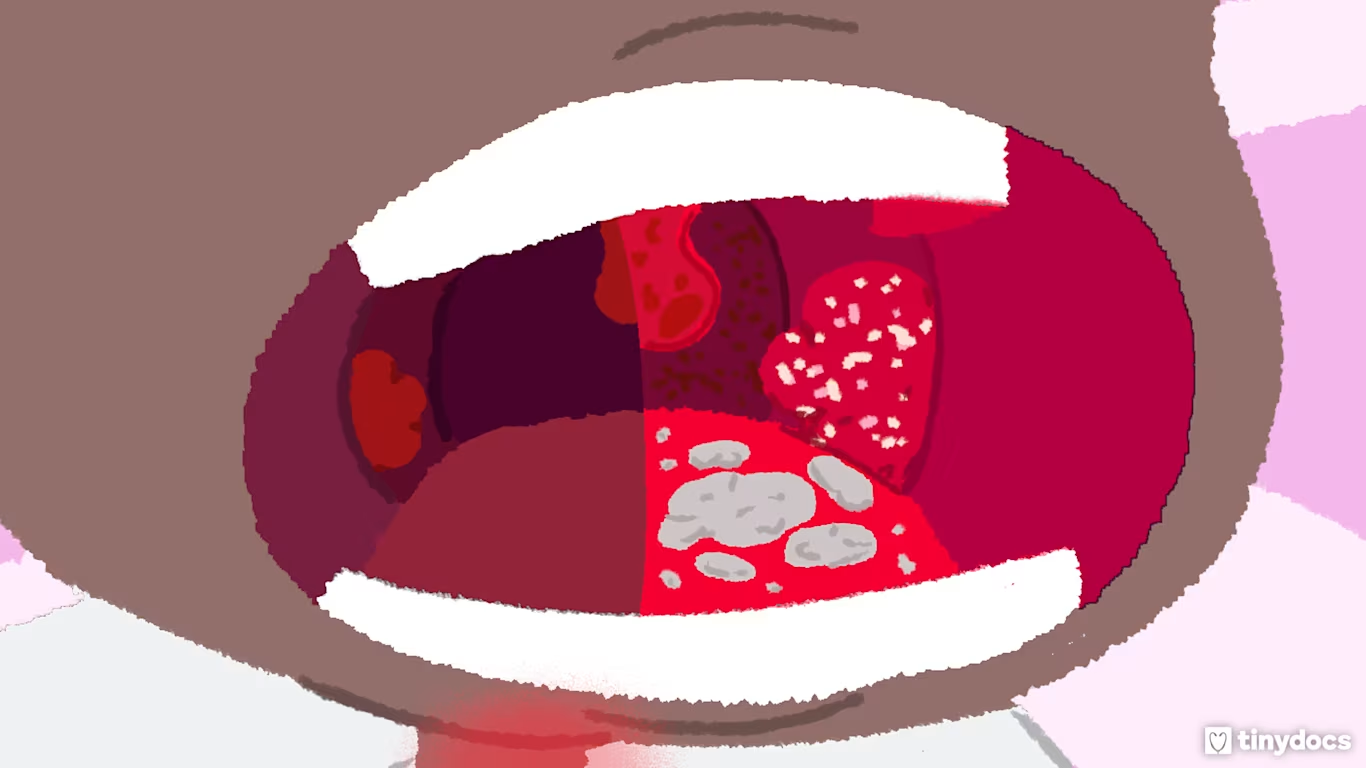
“Mom, it hurts to swallow.” I hear some version of this almost every day in clinic, especially once school starts. Most sore throats come from a cold and get better on their own. But some are strep throat in kids, and strep needs a doctor and medicine. So how do you tell them apart? And how do you get a nervous kid through the throat swab? Here’s what I tell the families I see. # What is strep throat? Strep throat is an infection caused by a germ called Group A strep. It’s a bacteria, not a virus. That difference matters, and I’ll explain why in a minute. I like to tell kids their tonsils are like two guards at the door of their throat. Most days they do a great job. Strep is a sneaky germ that slips past them anyway. About 3 in 10 sore throats in kids turn out to be strep. It’s most common in school-age children. Kids under 3 don’t get it very often. # Is it a cold or strep? A cold usually brings a cough, a stuffy nose, and a slow start. Strep tends to hit fast, and there’s usually no cough at all. Signs that make me think of strep: Throat pain that’s worse when swallowing Fever or chills Red, puffy tonsils, sometimes with white spots Sore, swollen glands on the sides of the neck Headache or tummy ache, and sometimes throwing up A red rash that feels rough, like sandpaper That last one has its own name: scarlet fever. It sounds scary, but it’s just strep with a rash, and it’s treated the same way. If your child has a few of these, call the doctor. # What happens at the strep test? The only way to know for sure is to swab the throat. The doctor or nurse uses a long cotton swab and touches the back of the throat. It takes about three seconds. Most offices run a rapid test first, and you’ll have an answer in 10 or 15 minutes. If it comes back negative, your doctor may send a second swab to a lab to double check. That one takes a day or two. # Getting your child ready for the swab Honestly, the swab is the part kids dread most. It doesn’t hurt much, but it feels weird, and it can make them gag. A little practice at home helps a lot. Here’s what I suggest: Tell them the truth in simple words. “The doctor will tickle the back of your throat with a long Q-tip. You might cough. Then it’s done.” Count it out together. “One, two, three, all done.” Three seconds feels short when you’ve practiced it. Try the lion roar. Have your child open wide, stick out their tongue, and roar “Ahhh!” It helps the doctor see, and most kids think it’s funny. Plan a treat for after. A popsicle works well, and it soothes the throat too. Kids handle things better when nothing is a surprise. Watching a short video together before the visit lets them see the whole thing first. # How strep is treated Because strep is a bacteria, antibiotics work on it. Your child will likely start to feel better within a day or two. Please finish every dose, even after your child feels fine. I can’t stress this enough. Stopping early lets the germ hang on. Untreated strep can, rarely, cause serious problems with the heart, joints, or brain. Colds are different. They’re caused by viruses, and antibiotics do nothing for a virus. That’s why we test instead of guessing. Helping them feel better at home Cold things feel great on a sore throat. Think popsicles, smoothies, or ice water. Soft foods like applesauce, yogurt, and soup go down easier too. Let them rest. Ask your doctor if fever or pain medicine is okay for your child. # When can my child go back to school? Most kids can go back once they’ve had no fever (without fever medicine) and have taken antibiotics for at least 12 hours. They should also feel well enough to get through a normal day. Schools have their own rules, though, so check with yours. Call the doctor right away if your child - Has trouble breathing - Is drooling or can’t swallow their own spit - Can’t open their mouth very wide - Isn’t drinking or peeing much - Seems worse after 2 days of antibiotics # Keeping strep from spreading Strep travels in the tiny droplets from coughs and sneezes. It also spreads through shared cups and forks. Wash hands with soap for 20 seconds. That’s “Happy Birthday” sung twice, which kids love. Use hand sanitizer when there’s no sink. Cough into an elbow. And for a few days, give everyone their own cup.
Tonsillectomy for Kids: A Pediatrician’s Guide for Parents
A child needing surgery can be an unsettling thought for a parent. A tonsillectomy for kids is one of the most common surgeries children have and most kids recover at home in 1 to 2 weeks. Before you agree to surgery, you should understand why it is the best choice for your child, how it is done, how to care for your child afterward, and what problems to watch for. ## What is a tonsillectomy? A tonsillectomy is surgery to remove the tonsils. The tonsils are soft tissues in the back of the throat. Normally, they help fight throat infections. Children can stay healthy without them, because the body has many other ways to fight germs. Sometimes the surgeon removes the adenoids at the same time. The adenoids are similar tissue that sits higher up, behind the nose. Removing both is called a tonsillectomy and adenoidectomy, or “T&A” for short. ## Why do kids need their tonsils out? There are two main reasons. The first is infection. Some children get throat infections (like strep throat) over and over. Doctors often consider surgery when a child has had 7 or more infections in 1 year, 5 or more a year for 2 years, or 3 or more a year for 3 years. The second reason is breathing. Sometimes the tonsils grow so big that they make it hard to breathe, especially during sleep. This is called obstructive sleep apnea. Parents may notice: - loud snoring most nights - pauses in breathing or gasping during sleep - restless sleep - a child who is tired, cranky, or has trouble focusing during the day - bedwetting that starts again after a child was dry If left untreated, repeated strep throat and sleep apnea can affect a child’s sleep, behavior, schoolwork, and growth. They can also lead to other serious problems. ## What age can a child have a tonsillectomy? There is no single right age. Your child’s surgeon will decide based on their health and symptoms. Children under 3 and children with severe sleep apnea may stay in the hospital overnight so the care team can watch their breathing. ## How to prepare your child for tonsil surgery Your child’s surgeon will give you instructions on when your child should stop eating and drinking. Please follow them closely. Your child will get anesthesia (sleep medicine) during surgery. Anesthesia relaxes the body, which makes it easier for food or drink in the stomach to come back up and get into the airway. An empty stomach keeps your child safe. If the instructions are not followed, the surgery may have to be moved. It also helps to talk with your child ahead of time. Kids cope better when they know what is coming. Use simple, honest words, such as: “The doctor is going to take out your tonsils so you can sleep better and get sick less.” Younger children may like hearing that tonsils are two little guards at the back of the throat that got too tired to do their job. When you talk about anesthesia, you might say, “You’ll get special sleep medicine, so you won’t feel anything. You’ll wake up when it’s done.” Try not to say “put to sleep,” since some children connect that phrase with pets. Be honest that their throat will hurt afterward and that it will get a little better each day. A favorite stuffed animal or blanket can come along to the hospital, too. Before surgery day, stock up on cold drinks, popsicles, and soft foods like applesauce, yogurt, pudding, and mashed potatoes. Ask your child’s doctor which pain medicine to have at home. ## What happens on surgery day? The surgery usually takes less than an hour, and your child will be fully asleep the whole time. If there are no complications, most children go home a few hours later. As the anesthesia wears off, your child may be sleepy, fussy, or a bit confused for a while. ## Tonsillectomy recovery at home Most children feel better in 7 to 10 days, though some need closer to 2 weeks. The sore throat often gets worse around days 3 to 5 before it starts to improve. Many kids also have ear pain, because the throat and ears share nerves. Other things that are normal during recovery: - bad breath, which can last up to 2 weeks - white or gray patches in the back of the throat (these are scabs, and they fall off on their own) - an upset stomach or some vomiting in the first day or two - a low fever in the first few days - snoring for a little while, until the swelling goes down To help your child heal, the most important thing is fluids. Cold drinks are soothing and help prevent dehydration. Start with soft, cool foods and add regular foods as your child feels ready. Keep your child away from sick people, and avoid sports and rough play for about 2 weeks. For throat pain, acetaminophen (Tylenol) and ibuprofen (Motrin) can help. Your child’s doctor will give you the correct dose and tell you how often to give it. Giving it on a schedule, rather than waiting for the pain to get bad, usually works best. Do not give children codeine or aspirin after this surgery. ## When to call the doctor after a tonsillectomy Bleeding can happen up to 2 weeks after surgery. It is most common around days 5 to 10, when the scabs come off. Go to the emergency room or call 911 right away if your child: has bright red blood coming from the mouth or nose, or vomits or spits up bright red blood has trouble breathing Call your child’s surgeon right away if your child cannot swallow liquids, cannot keep clear drinks down, or is peeing much less than usual. You should also call for a fever over 102°F or pain that medicine does not help. If your child still has a sore throat or ear pain after 2 weeks, contact their doctor. ## Tonsillectomy FAQs Is tonsil surgery painful for kids? Your child will not feel anything during surgery. Afterward, the throat will be sore for about 7 to 10 days. Pain medicine, cold drinks, and soft foods help. How long does tonsillectomy recovery take? Most kids recover in 7 to 10 days. Some take up to 2 weeks to feel fully back to normal. When can my child go back to school? Usually in 1 to 2 weeks, once they are eating and drinking well and no longer need regular pain medicine. Do tonsils grow back? Rarely. A small piece of tissue can grow back, but this is uncommon and usually does not cause problems. Will my child get sick less often? Children who had frequent strep throat usually have fewer throat infections after surgery. They will still catch colds. *This article is for general education and does not replace advice from your child’s doctor. Always follow the instructions from your child’s surgeon.*

The Importance of Mindfulness for Kids
These are strange, stressful, anxiety-inducing times. Children of all ages really need opportunities where they can take time out each day to "unplug" to relax and focus. Meditation and mindfulness practice offer this break and helps kids function more effectively and clearly. Meditative practices have been used since ancient times to improve health and well-being. But, just as an athlete may do different exercises, people who practice meditation often use different types. Many meditation practices use breathing techniques to promote a state of calm. Mindfulness meditation on breath, perhaps the most well-known type, involves sitting quietly, resting or closing your eyes and bringing your attention to your breath. When your attention drifts away, which it is likely to do, simply usher your attention back to your breath without judgment. You don't need years of meditative practice to benefit from this technique, nor do your children. There's no doubt, however, that sitting still for any length of time can be difficult for some kids. For this reason, a movement-based meditation, such as yoga, may serve as a good introduction. Meditation Tips 1. The length of time and frequency of meditating can vary for different people and different practices. But, pediatricians typically recommend the following time frames: - Preschool children: A few minutes per day. - Grade school children: 3-10 minutes twice per day. - Teens and adults: 5-45 minutes per day or more based on preference. 2. Try incorporating deep breathing into your children's daily bedtime routine—it can help them wind down for the night and make meditation easier to do when other situations arise. 3. Remind grade schoolers and teens to take a few deep breaths before answering a difficult question at school, taking a test, or before an athletic performance. 4. As young children learn to manage strong emotions, deep breathing can be part of the process—especially before and after time outs. 5. While meditation can be done on your own, it can also be done with the help of a trained professional. Some counselors and individuals with training in meditation can help others learn and practice meditation. 6. Meditation is not currently covered by most insurance plans unless given by a licensed counselor. It is always best to check with your individual plan. Flexible medical spending programs may count meditation training as a medical expense. 7. There are multiple ways to learn different practices of meditation. There are books, audio recordings, videos, online training, websites, and and even smartphone apps to help children meditate. Choose and practice the one that works the best for you and your child, and enjoy a calmer body, mind and spirit. Adapted from healthychildren.org
How to Explain Asthma to Kids: A Child Life Specialist Guide
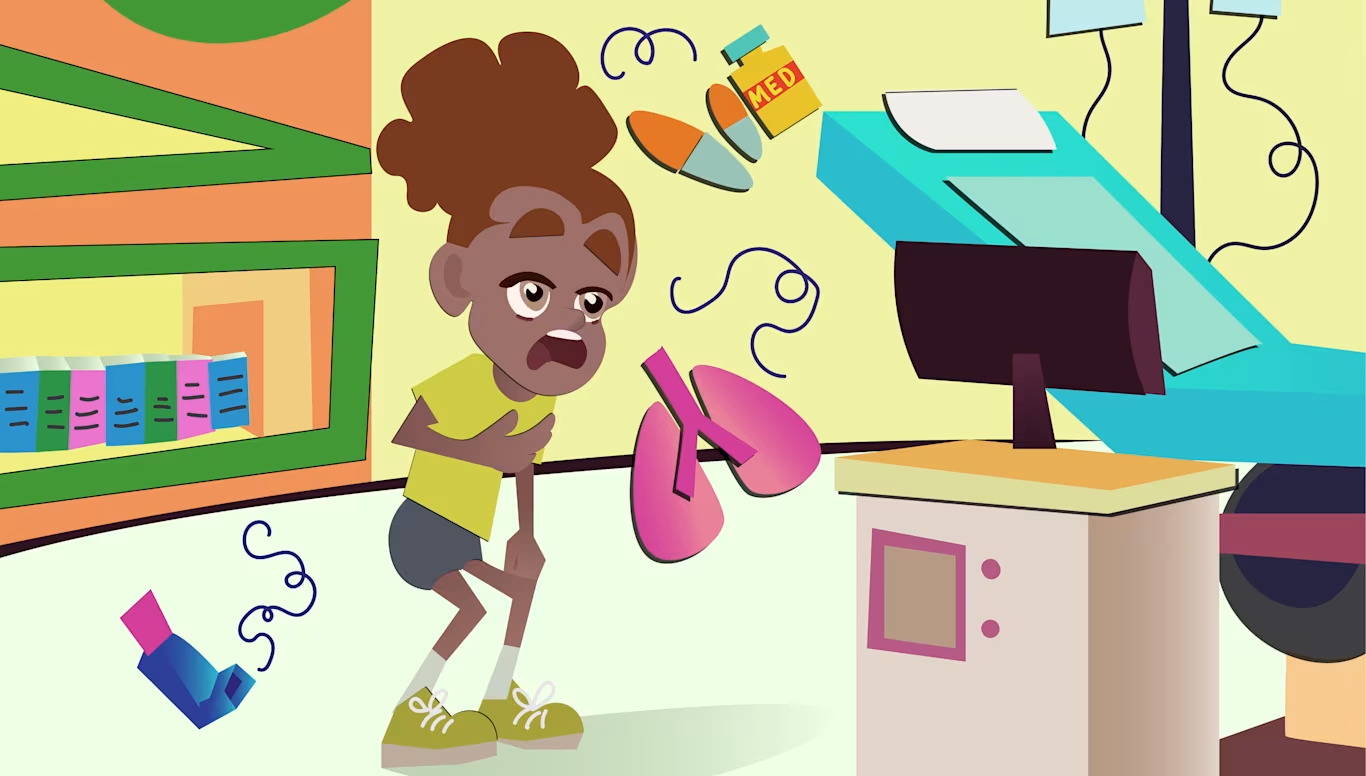
The best way to explain asthma to a child is to start by asking what they think the word means. Then keep it simple: asthma is when the small air tubes in the lungs get tight and narrow, which can make breathing harder. From there, talk about triggers and what to do when breathing feels tight, and use play to practice treatments. What does "asthma" mean to your child? For many of my patients, asthma has been part of their lives for as long as they can remember, and they get regular treatment, so they often think there's no need for education. I always like to start off by asking my school-age and adolescent patients what the word "asthma" means. You'd be surprised how many children are stumped by this question! Many even think asthma is worse than it actually is. Having children explain the condition in their own words can help healthcare professionals, parents, or even teachers see what the child already knows. How do you explain asthma in kid-friendly words? Try saying it like this: "Your lungs have little tubes called airways. Air travels through them like it does through a straw. With asthma, those tubes can get squeezy and narrow, so it's harder for air to get through. Your medicine helps the tubes relax and open back up." What are asthma triggers? After we've defined asthma, I like to go over triggers. Triggers are things that can make asthma symptoms start or get worse. Common triggers include: • Colds and other germs • Pollen • Dust • Pets • Smoke • Cold air • Running and playing hard Every child's triggers are different, so ask your child's doctor which ones matter most for them. What should a child do when asthma starts to act up? Diane, this section needs your guidance. Please cover what kids should do when they feel an asthma attack coming on, and point families to the child's asthma action plan. Please also include when to get emergency help. Always talk to your doctor, nurse, or another trusted grown-up if you have questions about your health. How do you help young kids feel okay about breathing treatments? My younger patients tend to have a very difficult time coping with breathing treatments, so my goal with this group is to normalize the aerosol mask (also called a nebulizer mask) through medical play. It's important to be patient. Some kids get comfortable with their own mask after just one session, but others take time and repetition. The goal is to make the mask as normal to them as the brush they use to comb their hair or the toothbrush they use to brush their teeth. If your child has an extremely difficult time with treatments, I encourage you to add something unique and special that is only used during treatments. For example: • Play-Doh • Uninterrupted tablet time • Finger painting Any of these can help your child associate asthma treatment with something positive. How do you keep teaching as your child grows? My best advice for caregivers of children with asthma is to keep reinforcing asthma education and medical play as your child grows older. Children are constantly developing their understanding of the world, so their understanding of asthma must grow and develop too.
How to Talk With Kids About Covid-19
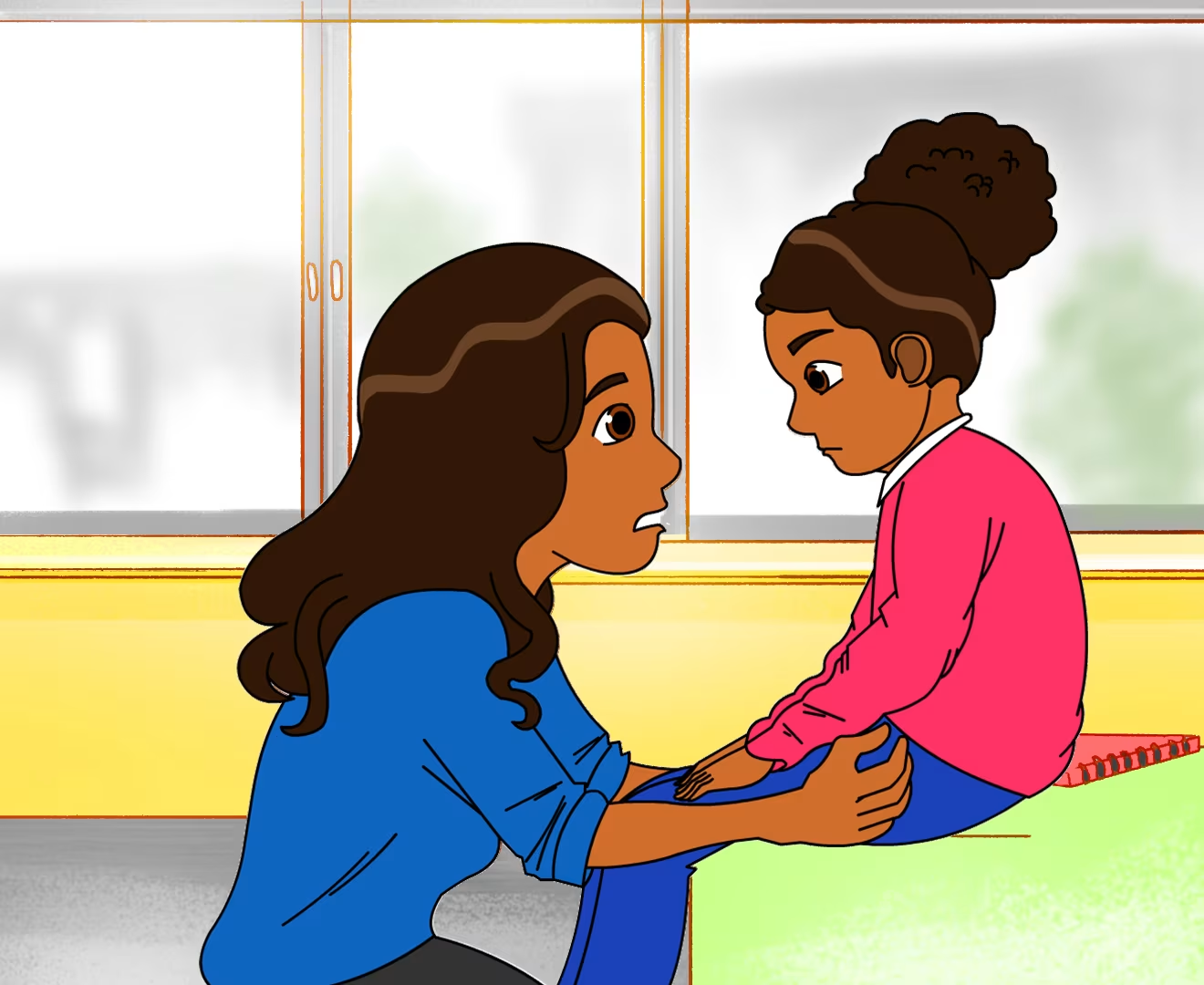
Explore the facts about COVID-19 and gain valuable knowledge regarding the pandemic. Read our informative blog to stay informed and educated.
5 Tips to Help Your Child at the Doctor
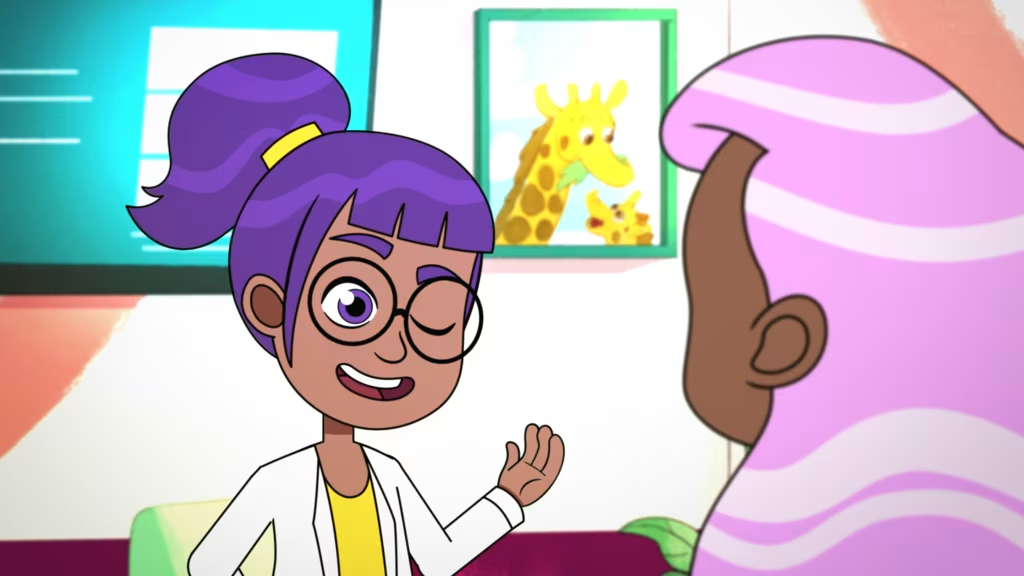
Taking your child to the doctor can be incredibly overwhelming. Children can often become frightened and anxious over what will occur. They may not fully understand what will happen and why. The unfamiliar environment, medical team, or previous clinical experience may increase their fears and make it that much more difficult. As a parent of two little ones, I use my skills as a child life specialist to help prepare them for what they will experience. It helps calm their nerves and mine. Here are five easy steps that you can follow to get through the doctor visit, feeling confident and comfortable. 1. Get the Facts Call your pediatrician ahead of time to find out exactly what will occur at the visit. Do they need a vaccination, blood test or urine sample? The more information you have than the better you are to explain. 2. Be Honest and Validate Children need to feel that they can trust you. They will look to you for the answers and support. Let them know that they have a doctor appointment coming up. Help them remember by bringing up the last time they were at the office. Was it a routine checkup? Sick visit? How will this appointment be similar or different? If they ask if they will get a shot, be honest. You can tell them, “Yes, you will be getting a shot. I know that you don’t like them, but I will be there to help you get through it.” Remember to validate and normalize their feelings. They don’t want to hear, “It’s just a little pinch or big boys/girls don’t cry.” The reality is that it does hurt, adults don’t like them either, but as parents we know the importance of the vaccination. 3. Books and Medical Play Reading a book about going to the doctor is a great start in preparing them. “It’s Time For Your Checkup: What to expect when going to a doctor visit” is a book that I published to help explain all the steps, including a blood test and vaccination. It is a social story and can be used for children at all developments. After you have read a book, than let your child explore with medical play. Use a play doctor kit filled with pretend and real materials, such as bandages, syringes, gauze, tape and rubber bands. Have them choose their favorite doll or stuffed animal and explore with the doctor kit. Give them some time to play on their own. What role are they playing? How are they using the materials? Are they asking questions or quiet and focused? After they have become comfortable with the doctor kit, than go through each step that they will experience at their checkup. Use simple language in explaining what will happen and why. Think about explaining the steps using their five senses. They will be able to have a better understanding and process what will happen. 4. Coping Strategies While you are playing or talking about what will occur, offer them choices and coping strategies. Do they want to sit on your lap in a therapeutic position or sit by themselves? Do they want to watch or look away? Do they want to ask and answer questions or have you be their voice? The more choices they have, than the more control they will feel. It can be difficult for kids to relax their body when they are very upset. Practice deep breathing, with bubble blowing or pretending to blow out birthday candles. This is a great technique to use when they are receiving a vaccination or bloodtest. Envisioning that they are some place else, listening to music, playing an I-Spy game, holding a comfort item or singing are also different ideas. What do they want to choose? 5. Packing a Coping Kit They now know what to expect and have made choices in ways to help distract and cope with the procedures. Give them some time to pack their own coping kit. They can pack the bag with comfort items, toys, snacks and even their own character bandages. This is a great way to keep them entertained while waiting for the doctor and to decrease anxiety during the procedures. Remember to validate their feelings, use supportive language and let them choose a bravery item or treat for getting through the exam.
You Don't Have to Figure It Out Alone
Receive thoughtfully curated health tips, activities, and resources—created with pediatric experts and designed for real family life. One email per week. No daily spam. Unsubscribe anytime.